|
|
|
Consider This:
Americans buy 87 percent of their groceries in supermarkets,
which have seen their sauce inventory explode by 574 percent
over a 30 year span. On today's supermarket shelves, 2/5's of
all jarred items have met the sauce classification of
the USSSA. | | Sauce owns a controlling share of the American diet. |
Consider This:
At least one item is consumed in direct conjunction with sauce
during the course of 92 percent of all of the meals we eat.
In the Midwest and High Plains regions, this figure
is even higher.
The USSSA has set the official sauce standard at a conservative
topping to item ratio (TIR) of 1 to 7 by volume. In real
terms, this means that for the purposes of statistical
bookkeeping and side by side comparisons with
extracontinental regions, American sauce consumption
is even higher than it already appears.
Quid est demonstratum -
the sauce issue is, here and
now more than ever, on the table.
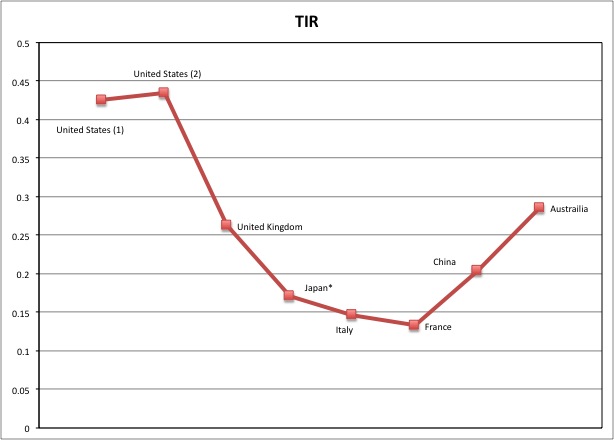
* Certain Japanese municipalities and regulatory bodies do not consider Soy Sauce as sauce do to its viscocity and content and reject its direct English translation. This issue has been a hot topic of debate as of late.
(1) In 1989 a STIR report was done to examine the effect of the famous Nevada buffets on sauce consumption
(2) This includes all of the continental United States as well as Alaska and Hawaii |
Americans consume sauce - SO WHAT?
"When considering the contempory sauce question
in America, the issue is not so much volume, as it
is voluminous," says James Walters, former professor of food
science at the Western Institute. "We don't want to stop
Americans from putting sauce on their food. We need to
keep them from setting sauce on their tables."
As USSC volunteers are trained always to remind, we do not
oppose sauce, only the waste of it.
Again, Mr. Walters: "What we are fighting here
is not palettes [personal tastes], so much as certain
societal moors that are not very palatable. [...]
"It is considered socially unacceptable at certain high
society functions to place a jar or bottle directly
on the table, even though such a container ostensibly
would be easily replaced in the refrigerator at the
end of the meal. Often a more presentable second
container is used, the contents of which are simply discarded
after dinner."
For this reason, the major focus of USSC efforts is to
encourage the use of Purchase Point Containers (PPC)
in a more broad variety of social settings. During 87 percent
of meals attended exclusively by members of a single family
entity or household, PPC are placed directly on the
table. When these core groups are joined by even a single outside eater,
the figure plummets to 54. With two or more additional eaters, it is 38. And
as Mr. Walters notes, additional sauces may be necessary
to accommodate the guest.
*For a free brochure of these statistics, click
here.(delivery may take 6-12 weeks)
| |
|